
How ready is your organization to put AI agents into everyday business operations? A useful starting point is to examine the capabilities around the agent: the process it serves, the authority it receives, the information it uses and the people accountable for its work.
Microsoft’s maturity model, explained
Microsoft describes five levels: Initial, Repeatable, Defined, Capable and Efficient. It assesses readiness across AI strategy and experience, business strategy, AI governance and security, technology and data, and organization and culture. Responsible AI applies across these dimensions. Read Microsoft’s model.

The decision that matters
Assess each pillar independently. Microsoft advises against combining them into one overall maturity score, because an average can hide weaknesses that constrain adoption. Source: how to use the model.
My recommendation: make your next investment address the capability that prevents a specific workflow from operating dependably. Buying a more capable model may have little effect when the real constraint is unclear ownership or unreliable source information.
A practical example
Imagine a purchase-request workflow. An agent gathers approved information and drafts a recommendation. An authorized person reviews the decision. An integration executes the approved action, and the team records the outcome for evaluation. This is an illustrative design, not a reported client implementation.
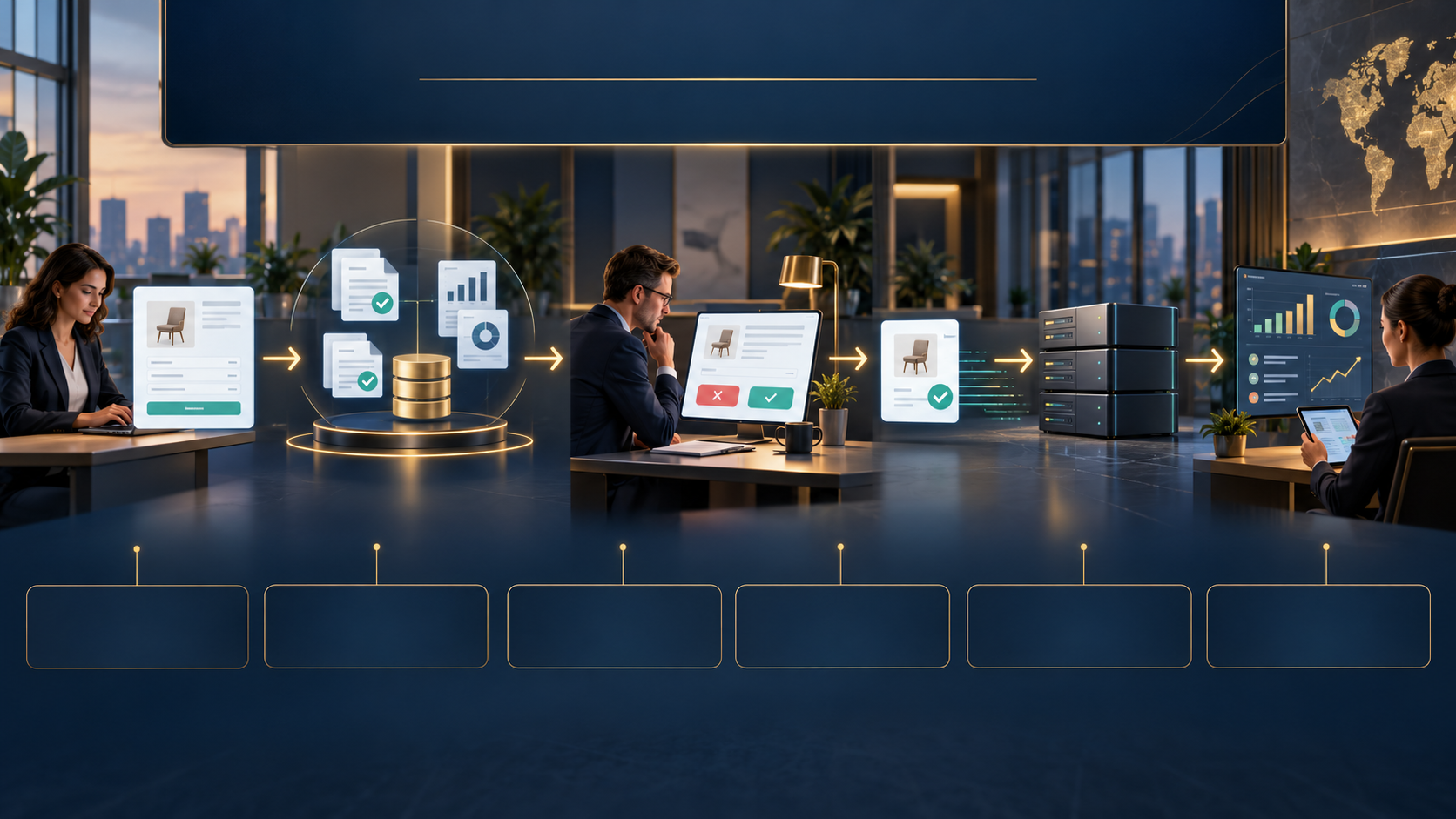
Microsoft’s governance guidance calls for differentiated controls, lifecycle ownership and clear human oversight as agents gain authority. Source: governance and security.
My suggested first 90 days
Begin by assessing readiness and selecting one bounded workflow with a measured baseline. Build a pilot using approved knowledge and explicit approval rules. Test failures and recovery paths. Then compare quality, review effort, cycle time and cost before deciding whether to expand. This is a suggested sequence, with timing dependent on your environment.
Watch the illustrated presentation
Download the presentation Discuss your AI readiness
Presented by Ahmad Al Shami. The video uses an AI-generated presenter likeness and synthetic English voice. Educational interpretation, not Microsoft endorsement. Sources reviewed 10 October 2026.
Continue from insight to action
Explore strategy, enterprise architecture and Agentic AI with Ahmad Al Shami.
Subscribe to Strategy to Execution Insights